Mold in isopod enclosure setups and mites are the two most common issues keepers run into. Fortunately, both are usually manageable once you understand what’s causing them.
Mold: When It’s Normal vs. a Problem
In fact, a small amount of white or fuzzy mold on wood or leaf litter is normal in a bioactive setup, and isopods often help clean it up themselves. It becomes a problem when:
- Mold covers a large portion of the substrate surface
- It has a strong, unpleasant odor
- It’s paired with visibly stressed or dying isopods
Fix: First, reduce misting frequency, improve airflow slightly, and remove any uneaten fresh food faster (see our feeding guide for feeding schedule guidance).
Mites: Beneficial vs. Harmful
Most mites found in isopod enclosures are harmless detritivores that coexist peacefully with isopods, feeding on the same decaying matter. However, some mite species can become a problem if populations explode rapidly.
Signs of a harmful mite outbreak:
- Visible mite swarms on food items within minutes of feeding
- Isopods appearing agitated or avoiding certain areas
- A sudden, sharp population explosion rather than a steady, small presence
Fix: First, reduce feeding frequency temporarily, remove uneaten food faster, and avoid overwatering — mites thrive in the same overly wet conditions that cause mold problems.
Preventing Isopod Mold and Mites
In most cases, mold and mite issues trace back to the same root cause: excess moisture and leftover food. As a result, reviewing our common mistakes guide covers the enclosure habits that prevent both issues before they start.
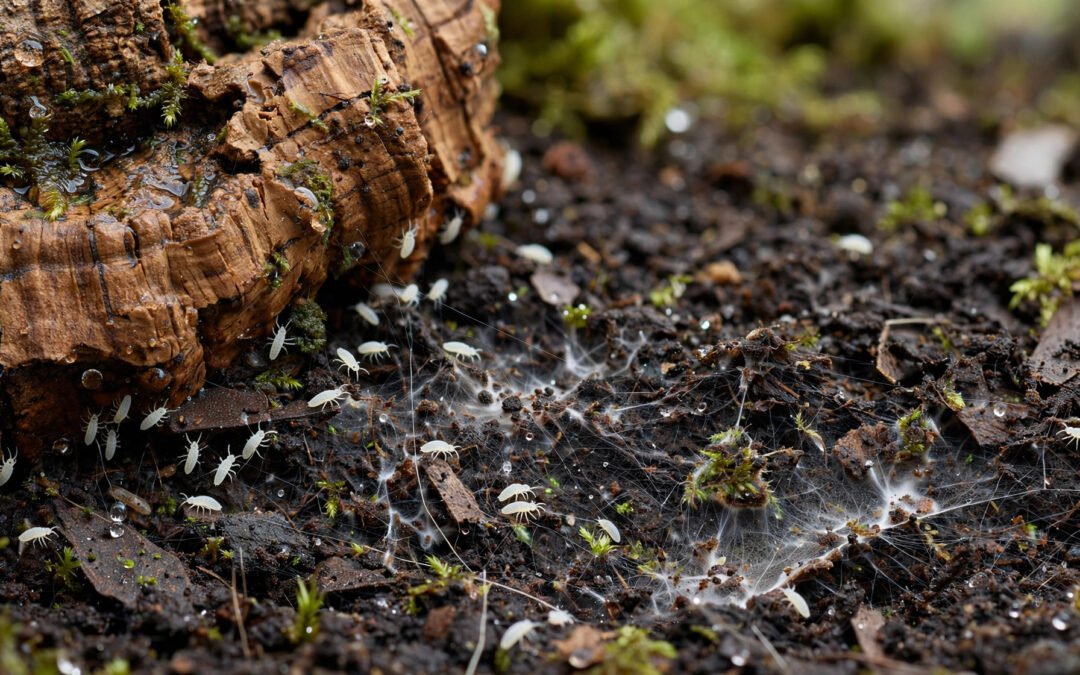
The best long-term defense against mold in isopod enclosure setups is a thriving springtail population. These tiny white cleanup crew members eat mold spores before they spread, keeping the substrate balanced. Seed them when you first set up the enclosure — they’ll establish in the moist areas and work alongside your isopods. Combined with proper ventilation and not overfeeding, springtails make mold outbreaks rare. Stagnant, humid air is the #1 mold trigger — our isopod ventilation guide shows how to balance airflow and humidity.
Can Isopods Eat Mold?
Yes, in small amounts. Isopods graze on fungi and surface mold as part of their detritivore diet, and a little mold on leaf litter or wood is usually nothing to worry about. But mold is not a food source to rely on, and heavy or spreading mold usually signals too much moisture, poor airflow, or uneaten food left too long. Fix the cause — improve ventilation, remove the old food, let one side of the enclosure dry slightly — rather than expecting isopods to clean it up. If mold covers food or substrate thickly, remove the affected piece. Springtails are the better mold control: they eat mold spores and outcompete mold, which is why many keepers run isopods and springtails together.
Frequently Asked Questions
Can isopods eat mold?
Yes, in small amounts — isopods graze on fungi and surface mold as part of their detritivore diet. A little mold on leaf litter or wood is usually harmless.
Do isopods eat mold in their enclosure?
They graze on small amounts of surface mold, but they will not clean up a heavy mold outbreak. Thick, spreading mold signals excess moisture or uneaten food — fix ventilation and remove the source, and consider adding springtails for mold control.
Do isopods eat mites?
They may pick at tiny invertebrates opportunistically, but they are not mite control. Most enclosure mites are harmless grain or soil mites. Reduce them by removing excess food, avoiding overfeeding, and letting one side of the substrate dry slightly.
Is mold in an isopod enclosure dangerous?
A little surface mold is usually harmless, but thick, spreading mold can stress a colony and signals excess moisture. Improve airflow, remove moldy food or substrate, and check that the enclosure is not staying wet all over.
References
- Australian Museum — Isopoda: australian.museum
- Encyclopaedia Britannica — Isopod: britannica.com
Note: Isopod care requirements can vary by species, enclosure size, and local conditions — treat the guidance above as a starting point and adjust to what your colony shows you.